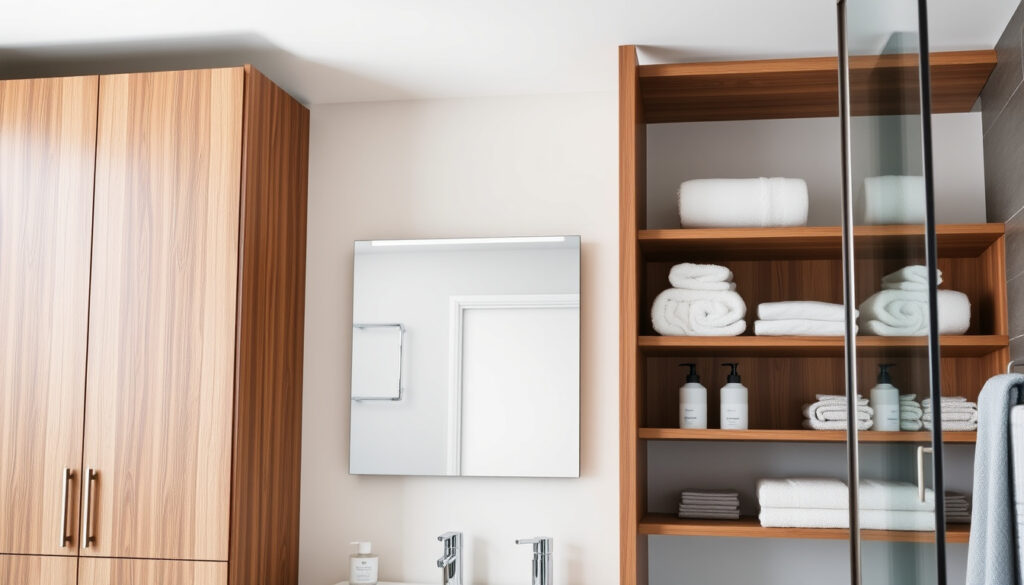
Bathroom Cabinets: Types, Buying Guide & Best Brands
Anyone who has ever tried to cram a hairdryer, a stack of towels, and three different cleaning sprays into a single bathroom cabinet already knows the struggle. But picking the right cabinet isn’t just about squeezing everything in — it’s about matching your storage habits to your bathroom layout. With wall-mounted units typically saving floor space and freestanding models offering more room, the choice can make or break your morning routine. By the end of this guide, you’ll know exactly which type fits your home, budget, and sanity.
Average cabinet width: 60 cm ·
Most common material: MDF with water-resistant coating ·
Market growth rate (annual): 4-6% ·
Top-selling type: Wall-mounted cabinets ·
Standard height range: 60-80 cm
Quick snapshot
- Space-saving, floating design, easy cleaning underneath (Design Cafe (interior design platform))
- Large storage, sturdy, can be moved (FACQ (bathroom specialist retailer))
- Combines mirror and storage, ideal for small bathrooms, often wall-mounted (ManoMano (home improvement marketplace))
- Organized storage, easy access, common in vanities (FACQ (bathroom specialist retailer))
Five key specs, one takeaway: the average bathroom cabinet is 60 cm wide, made of MDF, and comes with soft-close hinges — but the real difference is how it mounts and how much floor space you have.
| Specification | Value |
|---|---|
| Average Cabinet Width | 60 cm |
| Typical Material | MDF |
| Most Popular Type | Wall-mounted |
| Common Feature | Soft-close hinges |
| Average Price Range | €100 – €500 |
What are the different types of bathroom cabinets?
Wall-mounted cabinets
- Wall-mounted cabinets are fixed to the wall, leaving the floor clear. This makes them a strong choice for small bathrooms or minimalist designs, according to FACQ (bathroom specialist retailer).
- They create a lighter visual effect and make cleaning underneath much easier, as noted by Design Cafe (interior design platform).
- However, a single-sink wall-mounted unit can weigh around 50 kg, and a double-sink model up to 70 kg — so the wall must be load-bearing or brick (FACQ).
Freestanding cabinets
- Freestanding cabinets stand on the floor and are typically recommended for larger bathrooms and classic styles (FACQ).
- They usually offer more practical storage and are easier to replace or upgrade later (Design Cafe).
- Because they don’t require wall drilling, they can often fit around existing plumbing without major changes (Design Cafe).
Cabinets with mirrors
- Mirror cabinets combine a mirror with storage, making them a space-saving favourite for small bathrooms. They are almost always wall-mounted (ManoMano (home improvement marketplace)).
Cabinets with drawers
- Drawers are often advised over doors when maximizing storage in limited space because they let you see and reach items without digging (FACQ).
- Drawer cabinets are common in vanity units, offering organized storage for toiletries and accessories.
Wall-mounted cabinets save floor space but demand a sturdy wall; freestanding units give you more storage and flexibility but eat up floor area. For a small bathroom, wall-mounted wins — provided your wall can handle the load.
How do I choose between wall-mounted and freestanding bathroom cabinets?
Space considerations
- Wall-mounted cabinets are recommended for small spaces and contemporary styles because they free up floor area and make the room feel larger (FACQ).
- Freestanding cabinets need floor space and are better suited to larger bathrooms where they can stand without crowding the room (FACQ).
Storage capacity
- Freestanding cabinets usually offer more practical storage overall, with deeper shelves and more room for bulky items (Design Cafe).
- Wall-mounted cabinets have limited depth (typically 15–20 cm) but can be combined with other units to increase storage.
Installation difficulty
- Wall-mounted installation requires a load-bearing wall and often plumbing adjustments if pipes need to be concealed (Design Cafe).
- Freestanding cabinets are easier to install — they simply sit on the floor and can be positioned without drilling into walls (Design Cafe).
If you rent or plan to move, a freestanding cabinet is a no-brainer. If you own your home and want a sleek, modern look, wall-mounted is the way to go — but verify your wall type first.
What brands offer the best bathroom cabinets?
IKEA bathroom cabinets
- IKEA offers modular and affordable options, with wall-mounted cabinets designed to stash essentials like extra toothpaste and make-up, according to their product pages.
- The brand is known for its clean Scandinavian style and wide range of sizes.
JYSK bathroom cabinets
- JYSK provides Scandinavian-style furniture at budget-friendly prices, though durability reports vary for high-humidity bathrooms.
Other retailers
- Independent stores like Big Bathroom Shop and Homestore & More offer a wider variety of styles and price points, often with better after-sales support.
- Lowe’s (a major home improvement retailer) sells bathroom cabinets that can be either freestanding or wall-mounted, including linen cabinets (Lowe’s (home improvement retailer)).
What features should I look for in a bathroom cabinet?
Material and moisture resistance
- MDF with a water-resistant coating is the most common material, but moisture-resistant laminates are recommended to prevent water damage and extend cabinet lifespan (Design Cafe).
- Soft-close doors, adjustable shelves, and ready-assembled units are common functionality features worth considering (Showerdrape (bathroom accessories brand)).
Drawers vs shelves
- Drawers prevent clutter because you can see everything at a glance; shelves can hide items at the back. For limited space, drawers are the better bet (FACQ).
Size and height
- Standard heights range from 60 to 80 cm. Always measure your available space before buying — accurate measurements are strongly recommended to avoid unpleasant surprises (FACQ).
How do I install and maintain bathroom cabinets?
Installation basics
- Wall-mounted cabinets need to be fixed to wall studs or a solid brick wall. Check the structural capacity of the wall before installation (Design Cafe).
- Some guides recommend an anti-tip kit to securely anchor furniture to the wall as an essential safety feature (Joybuy (online marketplace, community advice)).
- Freestanding cabinets are generally simpler to install — just position them in place and level the feet.
Maintenance tips
- Clean with mild soap and water; avoid harsh chemicals that can damage the finish.
- For wall-mounted cabinets, periodically check that fittings remain secure and rust-free (Design Cafe).
- Freestanding cabinets with legs may require cleaning underneath to prevent dirt buildup (Design Cafe).
Five key differences, one pattern: wall-mounted sacrifices storage for floor space and a sleek look; freestanding gives you maximum capacity and easy installation but takes up room.
| Feature | Wall-Mounted | Freestanding |
|---|---|---|
| Floor space used | None | Yes |
| Storage capacity | Limited | High |
| Installation difficulty | Moderate (needs wall studs) | Easy |
| Cleaning under unit | Easy | May require sweeping |
| Best for | Small bathrooms, modern style | Large bathrooms, classic style |
| Plumbing changes | Often needed | Rarely needed |
Confirmed facts
- Wall-mounted cabinets require a sturdy wall (FACQ)
- Freestanding cabinets are easier to install than wall-mounted (Design Cafe)
- Drawers are often better than shelves for organization (FACQ)
- Moisture-resistant finishes extend cabinet lifespan (Design Cafe)
What’s unclear
- Which brand offers the longest durability? (No long-term independent studies available)
- Whether MDF is truly better than plywood for humid bathrooms (Depends on coating quality)
Our bathroom wall cabinets give you a place to stash your essentials, from extra toothpaste to make-up.
— IKEA product page (furniture retailer)
Floor standing cabinets stand on the floor, often offering more storage, while wall-mounted options save floor space but often provide less storage.
— Big Bathroom Shop (bathroom specialist retailer)
For the average UK homeowner, the choice between wall-mounted and freestanding comes down to one thing: wall strength. If you have solid brick walls, wall-mounted gives you a modern, spacious feel. If you’re in a plasterboard or stud-wall home, freestanding is the safer bet — or you’ll need to reinforce the wall. Either way, measure twice, buy once.
Related reading: Anniversary Gifts by Year · Dads Gifts: The Ultimate Guide for Irish Father’s Day & Christmas 2025
greaterbostoncontractors.com, shklbathroom.com, coldii.com, mexen.ie, royalbathrooms.co.uk, riluxa.com
Frequently asked questions
Do bathroom cabinets need to be waterproof?
Not fully waterproof, but they should have a moisture-resistant finish. Laminates and sealed MDF are common choices.
What is the best material for bathroom cabinets?
MDF with a water-resistant coating is the most popular option for its balance of cost and durability. Plywood is another option but more expensive.
Can I mount a cabinet over a toilet?
Yes, but ensure it’s securely fixed to the wall and doesn’t interfere with the toilet cistern. Measure the clearance carefully.
How deep should a bathroom cabinet be?
Typical depths range from 15–20 cm for wall-mounted cabinets to 30–40 cm for freestanding units.
Are ceiling-height cabinets a good idea?
They maximise storage but can make the room feel smaller. Use them in bathrooms with high ceilings for a balanced look.
How to organize bathroom cabinets?
Use drawer dividers, stackable bins, and clear containers. Keep frequently used items at eye level.
What is the difference between a bathroom cabinet and a medicine cabinet?
A medicine cabinet is a small wall-mounted cabinet specifically for toiletries and first-aid items, often with a mirror front. A bathroom cabinet is a broader category.
How often should I replace bathroom cabinets?
With proper maintenance, quality cabinets can last 10–15 years. Replace them when the finish starts peeling or the hinges rust.
More related posts
 Africa World Cup Qualifiers – 2026 Standings Results Qualified Teams
 Teddi Mellencamp: Cancer Prognosis and Family Update
 Molly Ringwald: Net Worth, Children, and Judd Nelson Incident
 1/8 Cup in Tbsp: Conversion Chart + Measuring Guide
 Light Switch Replacement: DIY vs Electrician Costs in Ireland
 Bad Bunny: Sexuality, Dating History & Career
 The Secret Lives of Mormon Wives – Cast, Scandal, Seasons Guide
 Climb Mt Robson: Difficulty, Cost, and Visibility Guide
