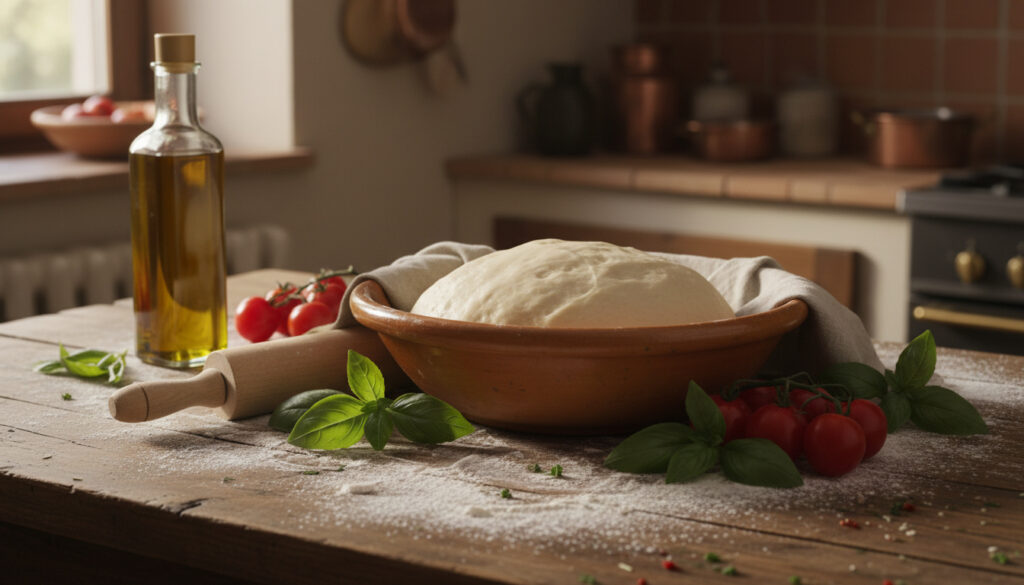
Recette Pate a Pizza – Authentic Italian Home Recipe
Authentic Italian pizza begins with the dough. More than a simple mixture of flour and water, the foundation of a true Neapolitan-style pie relies on precise hydration, minimal mechanical interference, and controlled fermentation. Modern home cooking has adapted these centuries-old techniques through appliances like the Thermomix, reducing active preparation to mere minutes while preserving the airy, tender crumb that defines quality pizza.
The pursuit of the perfect homemade pizza dough involves understanding the balance between tradition and convenience. Whether utilizing specialized Italian flour varieties or adapting recipes for gluten-free diets, the core principles remain constant: proper yeast activation, adequate resting periods, and high-temperature baking create the characteristic texture that separates artisanal pizza from commercial alternatives.
Home bakers now access methods that previously required professional equipment, from high-hydration ratios producing open crumb structures to express variations that bypass lengthy fermentation.
How Do You Make Authentic Pizza Dough at Home?
10 minutes
1-2 hours
4 pizzas
Beginner
Creating pizza dough at home requires fewer ingredients than most cooks anticipate, but technique proves more critical than complexity. The process centers on activating yeast in warm water before incorporating high-hydration flour to develop gluten structure without intensive labor.
- Flour Specification: Italian T00 flour, with its fine milling and moderate protein content, creates the distinctive elastic texture associated with Neapolitan pizza.
- Hydration Science: Ratios approaching 65% water to flour produce the open, irregular crumb structure prized in artisanal baking.
- Temperature Precision: Water heated to 37°C optimally activates yeast without thermal shock.
- Mechanical Efficiency: Thermomix kneading accomplishes in two minutes what requires ten minutes by hand, preventing overworking.
- Fermentation Window: A two-hour rise at room temperature develops sufficient flavor complexity for same-day baking.
- Oil Integration: Extra virgin olive oil added after initial mixing tenderizes the crumb without inhibiting gluten formation.
| Component | Quantity | Function |
|---|---|---|
| T00 or T45 Bread Flour | 400-500g | Provides gluten structure and chew |
| Warm Water (37°C) | 240-280ml | Hydrates flour and activates yeast |
| Fresh Yeast | 10-20g | Generates carbon dioxide for rise |
| Or Dry Yeast | 7-10g | Alternative leavening agent |
| Fine Sea Salt | 9-10g | Controls fermentation speed |
| Extra Virgin Olive Oil | 15-30ml | Adds tenderness and flavor |
| Honey or Sugar | 1 tablespoon | Accelerates yeast activation (optional) |
| Psyllium Husk | 7g | Binding agent for gluten-free variations |
What Ingredients Define Perfect Pizza Dough?
The distinction between average and exceptional pizza dough lies primarily in flour selection and water chemistry. Italian-style preparations specifically call for T00 flour, a finely milled wheat variety that absorbs water differently than all-purpose alternatives.
Properly hydrated dough should feel slightly sticky but cohesive. If the mixture cleans the sides of the mixing bowl while remaining attached to the bottom, the water-to-flour ratio approaches the optimal 60-65% hydration range.
Salt functions beyond seasoning; it regulates yeast activity and strengthens gluten networks. However, salt should never contact yeast directly in dry form, as concentrated sodium can shock the microorganisms. Instead, incorporate salt after the yeast has dissolved in water or mix it with flour before adding liquids.
Does Flour Type Really Matter?
Chez Patchouka confirms that T00 flour produces the characteristic soft, digestible crust of Neapolitan pizza. This Italian-milled wheat undergoes extensive sifting, removing bran and creating a powdery consistency that yields extensible dough.
Can Olive Oil Be Omitted?
While traditional Neapolitan dough (under AVPN guidelines) excludes oil, home recipes frequently incorporate 15-30ml to compensate for lower residential oven temperatures. The fat prevents the crust from drying during the longer baking times required at 250°C compared to wood-fired ovens reaching 485°C.
Which Italian Pizza Dough Recipe Delivers the Best Results?
The Cookomix methodology demonstrates that appliance-assisted mixing produces consistent results without the physical labor of traditional kneading. The Thermomix handles temperature-sensitive yeast activation and gluten development in a single vessel.
According to Pâte à pizza Thermomix italienne express, the appliance maintains precise 37°C temperatures during yeast blooming, then switches to dough mode for exactly two minutes of mechanical kneading.
How Does the Thermomix Method Work?
The process begins with dissolving yeast in warm water within the Thermomix bowl, setting the unit to 2 minutes at 37°C on speed 2. This controlled environment proves superior to manual mixing, where water temperature often fluctuates. Following activation, flour, salt, and oil join the mixture for a 2-4 minute kneading cycle using the dough hook function.
Cuisiner Sans Gluten formulations replace wheat with rice flour and cornstarch (Maïzena), requiring 7g of psyllium husk per 500g flour to replicate gluten’s binding properties. The resulting dough behaves differently, necessitating immediate use rather than extended refrigeration.
What About No-Yeast Alternatives?
For immediate gratification, express recipes utilize chemical leavening or eggs to create structure without fermentation. These preparations, documented by La Petite Bette, yield thinner, cracker-like crusts rather than the airy puffiness of yeast-risen dough, trading texture for speed.
How Long Should Pizza Dough Rest and Rise?
Fermentation time directly correlates with flavor complexity and digestibility. The standard one to two hour rise allows yeast to produce carbon dioxide and alcohol, creating the irregular air pockets visible in cross-sections of baked crust.
Ambient temperature significantly impacts timing. Dough placed in a draft-free environment with the oven light on (maintaining approximately 26-28°C) doubles in volume within 60 minutes. Cooler kitchens may require the full two-hour window. Gluten-free variations typically require 90 minutes due to the absence of gluten’s structural elasticity.
What Is the Complete Timeline From Mixing to Baking?
- Mixing Phase (0-10 min): Combine water and yeast, then incorporate dry ingredients through mechanical mixing.
- Bulk Fermentation (10 min-2 hours): Allow dough to double in volume in an oiled bowl covered with damp cloth.
- Portioning (2h-2h10): Divide into 200g portions for individual pizzas, forming tight balls.
- Bench Rest (2h10-2h25): Let shaped dough relax for 15 minutes to allow gluten relaxation.
- Shaping (2h25-2h35): Press or roll dough to 30cm diameter, preserving the raised cornicione (edge).
- Final Proofing (2h35-2h50): Allow shaped base to rest 10-15 minutes before topping to prevent sauce-induced sogginess.
- Baking (2h50-3h): Transfer to preheated stone or steel at maximum oven temperature for 8-12 minutes.
Which Techniques Are Proven Versus Experimental?
| Established Methods | Uncertain Variations |
|---|---|
| Thermomix kneading achieves equivalent gluten development to hand-kneading in one-fifth the time, as verified by Pâte à pizza Thermomix facile et inratable. | Extremely high hydration (75%+) without professional ovens often produces gummy, undercooked centers in home settings. |
| Gluten-free doughs require xanthan gum or psyllium to prevent crumbling, according to Yummix testing. | Sourdough starters for pizza remain unpredictable in home environments without strict temperature control. |
| Cold fermentation (24-72 hours refrigerated) enhances flavor through slow yeast activity. | “No-knead” extended hydration methods yield inconsistent results with low-protein flours. |
How Did Italian Pizza Dough Evolve Into a Global Staple?
The modern pizza dough traces its lineage to 18th-century Naples, where street vendors sold flatbreads topped with simple ingredients to working-class neighborhoods. These early preparations utilized basic elements—flour, water, salt, and wild yeast—creating an affordable, portable meal. For more information, check out New York Pizza Breda openingstijden.
The Associazione Verace Pizza Napoletana (AVPN) now governs traditional standards, mandating specific flour types, 60-65% hydration, and hand-stretching techniques. While these regulations prohibit mechanical mixing in certified establishments, home cooks using modern express methods adapt the spirit of these traditions to domestic kitchens.
The texture termed “moelleuse”—soft and airy with irregular alveoli—results from extended fermentation and high heat baking, characteristics that home recipes now approximate through overnight cold proofing and pizza stones.
What Do Culinary Authorities Say About Dough Preparation?
The perfect pizza dough requires patience more than skill. The yeast performs the work if given proper time and temperature.
— Traditional Neapolitan Methodology, Chez Patchouka
High-hydration doughs between 60-70% water content create the open crumb structure that distinguishes artisanal pizza from commercial bread-like crusts.
— Thermomix Adaptation Studies, Cookomix
What Are the Essential Considerations for Home Pizza Makers?
Successful pizza dough preparation hinges on respecting fermentation time and oven limitations. While traditional Neapolitan pies require 90-second bakes at 485°C, home ovens capped at 250°C necessitate adjustments—thinner dough, olive oil incorporation, and extended baking times. For those seeking mechanical assistance, Pâte à pizza Thermomix facile et inratable offers documented workflows that maintain authenticity while reducing labor.
Frequently Asked Questions
Can pizza dough be prepared without a Thermomix?
Yes. Hand-kneading achieves identical results with 8-10 minutes of folding and pressing on a floured surface until the dough becomes smooth and elastic.
Why does my dough tear when stretching?
Insufficient resting time causes gluten tightness. Allow shaped dough balls to rest 15-20 minutes covered, permitting the gluten network to relax before extension.
Is T00 flour available outside Italy?
Specialty Italian grocers and online retailers stock T00 flour. Alternatively, bread flour with 11-12% protein mixed with all-purpose flour approximates the protein content.
Can I freeze pizza dough?
Portioned dough wraps tightly and freezes for one month. Thaw overnight in refrigeration, then bring to room temperature before shaping.
Why add sugar to pizza dough?
Honey or sugar accelerates yeast activation but remains optional. Traditional Neapolitan recipes exclude sweeteners, relying solely on flour starches.
How do I prevent a soggy center?
Pre-heat baking surfaces thoroughly, use moderate sauce applications, and allow shaped dough to proof 10 minutes before topping to create a moisture barrier.
Can I use a bread machine instead?
Bread machines handle mixing and first rise automatically. Use the dough cycle, then proceed with portioning and shaping as with Thermomix-prepared dough.
More related posts
 Eintracht Frankfurt vs Liverpool – Preview, Lineups and Prediction
 Incoming (2024) Review: Age Rating, Sequel, Ending
 Eddie Guerrero: Cause of Death and Last Words
 Clark Kent: Biography, Origins, Smallville, and LGBTQ+ Storylines Explained
 Odessa A’zion: Biography, Career & Key Facts
 Early Stage Pink Eye Symptoms: How to Spot and Stop It Fast
 Victoria Justice: Biography, Career, Health, and Facts
 Duffer Brothers: Complete Guide to Stranger Things Creators
