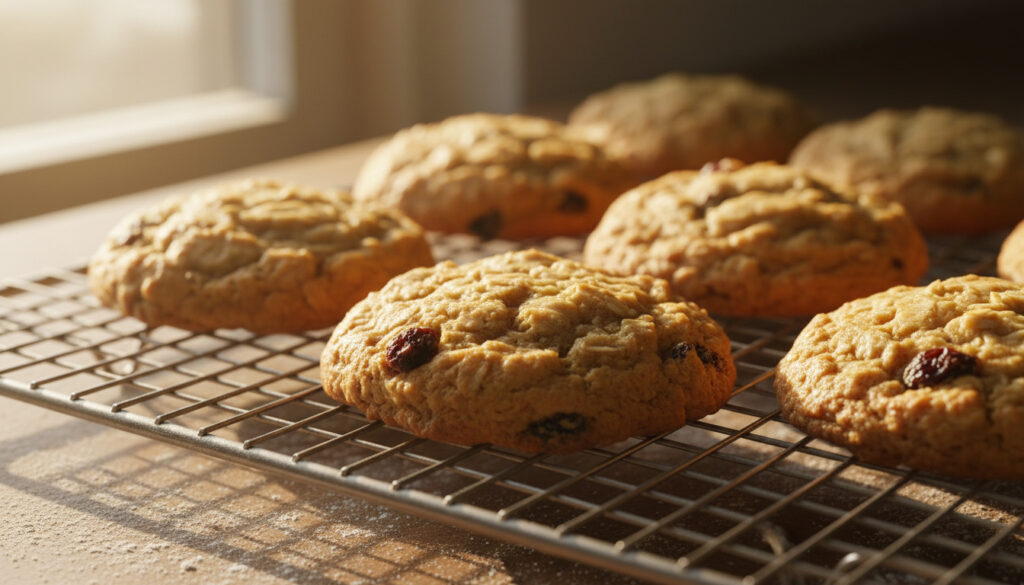
Oatmeal Raisin Cookies Recipe – Chewy Soft Bakery Style
The enduring appeal of oatmeal raisin cookies lies in their textural contrast—chewy centers yielding to crisp edges, punctuated by plump fruit. Despite their reputation as a wholesome alternative to chocolate chip varieties, achieving bakery-quality results requires precise technique and specific ingredient ratios rather than guesswork.
Home bakers frequently encounter the same pitfalls: flat, spread-out discs instead of thick, moist rounds. The difference between mediocre and exceptional cookies hinges on understanding how brown sugar retains moisture, why butter temperature affects spread, and which oat type provides the characteristic bite that defines this classic.
This guide synthesizes methodologies from professional food bloggers including Grandbaby Cakes, Live Well Bake Often, and Fresh April Flours to provide a comprehensive approach to creating oatmeal raisin cookies that maintain their structure while delivering the promised chewiness.
How Do You Make Oatmeal Raisin Cookies?
The foundation of any reliable oatmeal raisin cookie recipe rests on the balance between fat, sugar, and hydration. Recipes tested across multiple platforms yield consistent results when bakers follow specific measurements rather than approximations, particularly regarding the ratio of brown to granulated sugar and the specific type of oats utilized.
| Classic Chewy | Soft Bakery-Style | Healthier Low-Sugar | Vegan Adaptation |
|---|---|---|---|
| Prep: 10-15 mins | Prep: 15 mins | Prep: 15 mins | Prep: 10-15 mins |
| Cook: 8-14 mins | Cook: 12-14 mins | Cook: 10-12 mins | Cook: 10-12 mins |
| Yield: 24-30 | Yield: 24 | Yield: 24 | Yield: 24 |
| Key Twist: High brown sugar ratio | Key Twist: 70g dough balls | Key Twist: Date paste substitution | Key Twist: Flax egg binding |
Essential Insights for Success
- Chilling dough for thirty minutes prevents excessive spread and allows flavors to develop more fully
- Old-fashioned rolled oats absorb less moisture than quick oats, maintaining structural integrity throughout baking
- Brown sugar’s molasses content retains moisture during the baking process through sugar inversion chemistry
- Room temperature butter—specifically cool-soft rather than melted—creates the ideal emulsion for texture
- Brief cooling on the baking sheet, precisely five minutes, allows cookies to set without becoming brittle
- Spacing dough portions two to three inches apart ensures even heat circulation and prevents merging
- Toasting oats before incorporation adds nutty depth without compromising the final chewiness
Standard Ingredient Specifications
| Ingredient | Amount | Function |
|---|---|---|
| Unsalted butter | ½–1 cup (115–226g) | Structure and moisture base |
| Packed brown sugar | ½–1 cup (100–200g) | Chewiness via molasses retention |
| Granulated sugar | ¼ cup (50g) | Controlled spread and crisp edges |
| Large eggs | 1–2 | Binding and emulsification |
| Pure vanilla extract | 1 teaspoon | Flavor enhancement |
| All-purpose flour | 1–1½ cups (125–190g) | Gluten structure formation |
| Baking soda | ½ teaspoon | Leavening without excess spread |
| Salt | ¼–½ teaspoon | Flavor amplification |
| Ground cinnamon | ½ teaspoon | Warm spice base |
| Old-fashioned rolled oats | 1½ cups (120–150g) | Textural chew and fiber |
| Raisins | ½–1 cup (80–150g) | Sweet bursts and moisture |
Execution begins with beating softened butter and both sugars until fluffy, incorporating air that contributes to lift. Eggs and vanilla follow, mixed until just combined. Dry ingredients—whisked separately with oats—merge into the wet mixture on low speed until barely combined, at which point raisins fold in to prevent overworking the gluten. Best Restaurants in Montreal – 25 on Canada’s 100 Best 2025 demonstrates similar precision in ingredient handling across professional pastry programs.
How Do You Make Chewy Oatmeal Raisin Cookies?
Texture represents the primary battleground for home bakers. Chewiness emerges from specific chemical interactions rather than luck, primarily involving the hygroscopic properties of brown sugar and the protein structure development within the dough.
Why Do My Oatmeal Cookies Go Flat?
Overbeating incorporates excess air that collapses under heat, while butter that is too warm causes immediate spreading before the protein structure sets. Insufficient flour ratios or low oven temperatures fail to establish edge structure quickly enough. Live Well Bake Often identifies these variables as the primary culprits alongside inadequate baking soda activation.
What Makes Oatmeal Raisin Cookies Soft?
Moisture retention determines softness. Brown sugar contains molasses, which attracts and holds water molecules during and after baking. Removing cookies from the oven while centers appear slightly underdone—appearing wet in the middle—allows carryover cooking to complete the texture without drying the crumb. Fresh April Flours emphasizes that proper butter emulsion creates the tender crumb structure sought by most home bakers.
Best Oatmeal Raisin Cookies Without Chilling?
While chilling firms butter to prevent spread, immediate baking yields acceptable results if the butter remains at cool room temperature rather than warm. Cookies spread approximately ten percent more but maintain chewiness when portioned correctly and spaced adequately apart on parchment-lined sheets.
Butter must sit at cool room temperature—approximately sixty-five degrees Fahrenheit—for optimal creaming. Spread increases exponentially with each degree above seventy degrees, directly causing flat cookies regardless of other ingredient ratios.
For those monitoring entertainment schedules while baking, updates on Solo Leveling Season 3 – Unconfirmed Amid 2026 Movie Plans provide parallel timing considerations for multi-tasking.
Can You Use Quick Oats in Oatmeal Cookies?
Oat selection significantly impacts final texture, yet substitution remains possible with adjusted expectations.
Old-Fashioned Versus Quick Oats
Old-fashioned rolled oats provide distinct chew because their thicker cut absorbs less liquid during baking and maintains structural integrity against heat. Quick oats, being thinner and partially precooked, hydrate faster and create softer, more uniform texture with less characteristic bite. Chef Lindsey Farr confirms that old-fashioned oats produce the bakery-style chew most associated with premium cookies.
When substituting quick oats for old-fashioned, reduce the volume by two tablespoons to prevent excessive dryness, as quick oats absorb moisture more rapidly during the creaming and baking phases.
How Long Do Oatmeal Raisin Cookies Last?
Proper storage extends enjoyment while maintaining the textural qualities achieved during baking.
Room Temperature Storage
Airtight containers maintain optimal freshness for three to five days at room temperature. Refrigeration extends viability to one week but requires a five-second microwave reheat to restore softness lost to cold temperatures.
Freezing Instructions
Portioned dough balls freeze effectively for up to three months; bake directly from frozen with two to three minutes additional time. Baked cookies freeze for two months in airtight containers with parchment paper between layers to prevent sticking. The Pioneer Woman recommends this method for maintaining large-batch availability.
Double-wrapping dough in plastic wrap before placing in freezer bags prevents odor contamination and freezer burn, which causes off-flavors in the butter and oat components after thirty days.
What Is the Timeline for Making Oatmeal Raisin Cookies?
- Preparation (10–15 minutes): Creaming butter and sugars, incorporating eggs and vanilla, whisking dry ingredients, and folding in raisins. Grandbaby Cakes recommends five minutes of creaming for optimal air incorporation.
- Optional Chill (30 minutes): Refrigerating dough firms butter and develops flavor complexity through hydration.
- Baking (8–14 minutes): 350°F until golden edges form and centers appear slightly underdone; rotation midway compensates for oven hot spots.
- Cooling (5–10 minutes): Sheet rest allows protein and starch structures to set before transfer to wire racks prevents breakage.
What Is Certain About Oatmeal Raisin Cookie Science?
| Established Facts | Variable Factors |
|---|---|
| Brown sugar ratios above fifty percent produce measurably chewier textures through molasses retention | Exact chilling time varies by kitchen ambient temperature and refrigerator efficiency |
| Old-fashioned oats provide demonstrably chewier texture than quick oats in controlled testing | Raisin plumping methods (soaking versus dry) affect distribution but remain preference-based |
| 350°F baking temperature sets proteins and starches at optimal rates for structure | Oven calibration variations may require ±2 minutes adjustment |
| Butter temperature at sixty-five degrees creates ideal emulsion stability | Altitude above 3,000 feet requires flour and liquid adjustments not standardized across recipes |
Nutritionally, each thirty-gram cookie contains approximately 150–200 calories, with oats providing beta-glucan fiber that slows digestion. Scientifically Sweet notes that cinnamon compounds may contribute to blood sugar stabilization, though the butter and sugar content remains significant.
What Is the Cultural Context of Oatmeal Raisin Cookies?
The combination of whole grain oats and dried fruit creates a perception of wholesomeness rarely associated with candy-studded alternatives. Cinnamon and vanilla provide aromatic warmth that complements the caramelized notes of brown sugar, creating a flavor profile distinct from chocolate-dominant desserts.
Despite trends toward elaborate pastries, this twentieth-century American standard persists in home kitchens due to pantry-staple accessibility and straightforward technique. The recipe accommodates variation—from nutmeg additions to walnut inclusions—without structural compromise.
What Do Professional Bakers Recommend?
More brown sugar means chewier cookies due to the moisture from molasses, while granulated sugar controls spread and adds crispness to edges.
— Synthesis from Grandbaby Cakes and Live Well Bake Often testing
Old-fashioned rolled oats absorb less liquid and stay chewy versus quick oats, which create softer, almost cake-like textures.
— Fresh April Flours methodology
What Are the Key Steps to Perfect Oatmeal Raisin Cookies?
Monitor butter temperature carefully to maintain the cool-soft stage, select old-fashioned oats for characteristic texture, and remove cookies from the oven while centers remain slightly underdone to account for carryover cooking. Proper storage in airtight containers maintains quality for immediate consumption, while freezing extends availability for up to three months without significant degradation.
Frequently Asked Questions
Can I substitute steel-cut oats for rolled oats?
Steel-cut oats require precooking or soaking before incorporation, as their hard, uncooked texture remains unpleasant after standard baking times. Rolled oats provide the intended texture without additional preparation.
Why do my cookies taste cakey rather than chewy?
Cakey texture typically results from melted butter, over-mixing after adding flour, or insufficient brown sugar. Ensure butter remains cool-soft and mix dry ingredients until just combined.
Can I reduce the sugar significantly without ruining the texture?
Reducing sugar by more than twenty-five percent compromises moisture retention and spread. Consider date paste or applesauce substitutions for portions of sugar to maintain hydration.
How do I prevent raisins from burning on the exterior?
Press raisins into the dough balls rather than leaving them exposed on top. Plumping raisins in warm water before draining and folding into dough also reduces surface burning.
Is oil an acceptable replacement for butter in this recipe?
Coconut oil or vegetable oil produces softer, cake-like cookies lacking the buttery flavor and crisp edges. If substituting, use twenty percent less volume than butter required.
What happens if I use only brown sugar without granulated?
Exclusively brown sugar creates excessive spread and sticky texture. The blend provides moisture from molasses while granulated sugar crystallizes to create structure and crisp edges.
Can I add chocolate chips to this base recipe?
Replacing half the raisins with chocolate chips creates oatmeal raisin chocolate chip cookies without altering baking times or temperatures. Fold chips in simultaneously with raisins.
More related posts
 Liam Hemsworth: Relationship Timeline, Divorce & New Engagement
 Kimberly Williams-Paisley: Marriage, Career, Health, and Advocacy
 Home Depot Park Royal: Hours, Address, Jobs West Vancouver
 Colleen Jones: Death, Legacy & Son’s Brier Debut
 Britt Robertson: Husband, Net Worth & Biography
 North Korea Nuclear Weapons 2025: Arsenal, Tests and Impact
 Annie-Soleil Proteau: Age, Partner, Parents & Shows
 Clifton Hill Fun Pass: Price, Inclusions & Redeem
