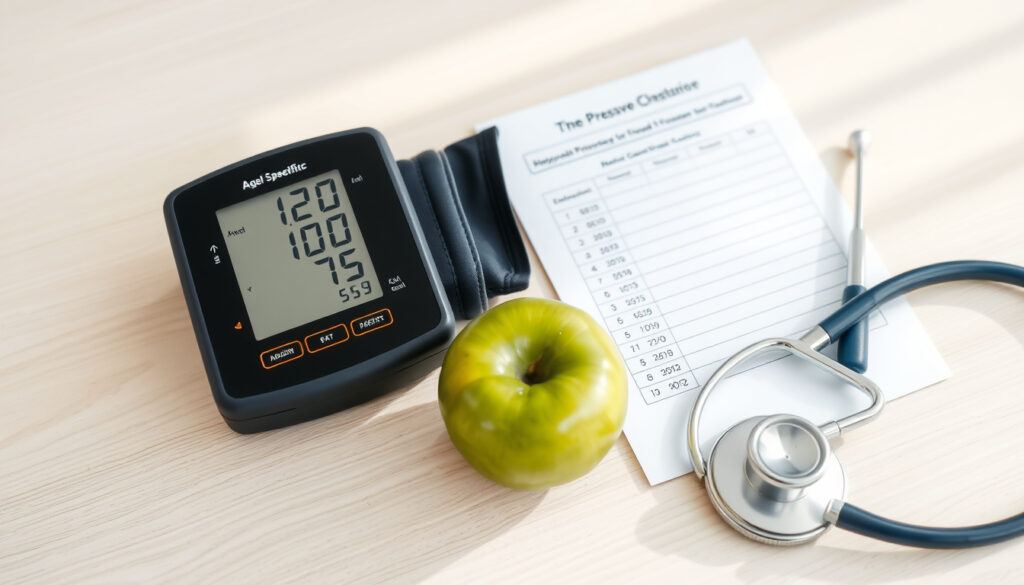
Normal Blood Pressure: Age-Specific Chart & Tips
Few numbers in your health chart carry as much weight as the two digits that measure your blood pressure. But understanding what those numbers mean — and what they should be — isn’t always straightforward, because different guidelines from the American Heart Association, the Irish Heart Foundation, and the HSE offer different answers. This guide unpacks the age-specific targets, the stroke-level danger zones, and the lifestyle changes that can actually move the needle.
Normal Blood Pressure (Adults): Less than 120/80 mm Hg ·
Elevated Blood Pressure: Systolic 120-129, Diastolic less than 80 mm Hg ·
Hypertension Stage 1: Systolic 130-139 or Diastolic 80-89 mm Hg ·
Stroke-Level (Hypertensive Crisis): Systolic over 180 mm Hg or Diastolic over 120 mm Hg ·
Ideal for Over-80s (UK/EU): Below 150/90 mm Hg (145/85 at home)
Quick snapshot
- Normal blood pressure for most adults is below 120/80 mm Hg (American Heart Association)
- Stroke-level blood pressure is above 180/120 mm Hg (American Heart Association)
- Walking 30 minutes a day can lower blood pressure by 5–8 mm Hg systolic (American Heart Association)
- Optimal target for adults over 80 varies between guidelines (<130/80 vs <150/90) (HSE Ireland)
- Isolated systolic hypertension in elderly: aggressive treatment benefit vs harm is debated (Irish Heart Foundation)
- Whether 140/70 is “healthy” depends on age, comorbidities, and guideline used (Harvard Health)
- 2017: AHA/ACC redefine hypertension as ≥130/80 mm Hg (Harvard Health)
- 2020: European Society of Hypertension maintains classic threshold of ≤140/90 (NIH)
- 2021: Irish Heart Foundation updates ideal target to under 120/70 (Irish Heart Foundation)
- Ongoing studies on optimal targets for older adults and isolated systolic hypertension may lead to further guideline refinements (World Health Organization)
- Home monitoring and wearable BP devices are expected to play a larger role in personalized treatment (CDC)
Five key numbers that define the blood pressure landscape, pulled from the AHA, HSE, and Irish Heart Foundation.
| Metric | Value |
|---|---|
| Healthy adult reading | less than 120/80 mm Hg |
| Stroke-level threshold | systolic >180 or diastolic >120 |
| Over-80s target (HSE) | below 150/90 (or 145/85 at home) |
| Walking 30 min/day effect | reduces systolic by 5–8 mm Hg on average |
| Irish Heart ideal | less than 120/70 mm Hg |
What is a normal blood pressure by age?
Blood pressure categories according to the American Heart Association
- Normal: less than 120/80 mm Hg (American Heart Association)
- Elevated: systolic 120–129, diastolic less than 80 (American Heart Association)
- Stage 1 hypertension: systolic 130–139 or diastolic 80–89 (American Heart Association)
- Stage 2 hypertension: systolic ≥140 or diastolic ≥90 (American Heart Association)
- Hypertensive crisis: systolic >180 or diastolic >120 (American Heart Association)
The AHA categories apply to all adults, but age modifies the target. For someone under 80, hitting below 120/80 is the goal. For those over 80, the HSE suggests a softer target of below 150/90 — a trade-off between preventing stroke and avoiding hypotension from overtreatment.
Age-specific targets from Irish Heart Foundation and HSE
- Irish Heart Foundation ideal: less than 120/70 mm Hg for all adults (Irish Heart Foundation)
- HSE target for under 80s: below 120/80 mm Hg (HSE Ireland)
- HSE target for over 80s: below 150/90 mm Hg (or 145/85 at home) (HSE Ireland)
- Australian guidelines: normal for all adults is <120/80, with treatment targets individualized (Heart Foundation Australia)
The pattern: Younger adults need tighter control; older adults get a slightly higher target to balance risks. The implication: a single number like 120/80 is a good starting point, but your doctor may adjust based on your age and health.
Is 140 over 70 a healthy blood pressure?
Systolic 140 interpretation
- AHA classifies systolic 140 as stage 2 hypertension (American Heart Association)
- For an adult under 80, this is above target and usually requires medication (Harvard Health)
- For an adult over 80, some guidelines (e.g. HSE) consider 140 systolic acceptable if the diastolic is well controlled (HSE Ireland)
Diastolic 70 interpretation
- Diastolic 70 is within the normal range (<80) (American Heart Association)
- Isolated systolic hypertension (normal diastolic, high systolic) is common after age 60 (Irish Heart Foundation)
Clinical significance of isolated systolic hypertension in older adults
- Isolated systolic hypertension affects about 2 in 3 people over 65 (CDC)
- Treatment reduces stroke risk but may cause dizziness or falls if diastolic drops too low (World Health Organization)
The catch: 140/70 is not a “healthy” reading for a middle-aged adult, but for an 80-year-old it may be acceptable. The trade-off: treating the systolic number aggressively can lower diastolic below 60, which is linked to adverse outcomes in the elderly.
What is the danger zone of blood pressure?
Hypertensive crisis defined
- Danger zone: systolic >180 or diastolic >120 (American Heart Association)
- Immediate medical attention required (Harvard Health)
- May cause stroke, heart attack, kidney damage (World Health Organization)
When to seek emergency care
- If you have a reading >180/120 and symptoms (chest pain, shortness of breath, severe headache, vision changes), call 911 (CDC)
- If asymptomatic but still >180/120, seek same-day evaluation (American Heart Association)
Risk of organ damage
- Sustained hypertension damages arteries, leading to heart attack, stroke, and kidney failure (World Health Organization)
- Hypertensive crisis can cause aortic dissection, a life-threatening condition (American Heart Association)
What this means: the danger zone is not a suggestion — it’s a medical emergency. If your monitor shows numbers above 180/120, act immediately.
What blood pressure is stroke level?
Numbers that indicate risk of stroke
- Stroke-level: systolic >180 or diastolic >120 (AHA) (American Heart Association)
- Sustained hypertension (Stage 2, >140/90) increases long-term stroke risk by 2-4 times (World Health Organization)
- Acute surge past 180/120 is a medical emergency (Harvard Health)
Stroke risk at sustained or acute readings
- Chronic hypertension damages blood vessels, leading to clot formation and stroke (CDC)
- Acute severe hypertension can cause hemorrhagic stroke (bleeding in the brain) (American Heart Association)
Hypertensive emergency vs urgency
- Emergency: >180/120 with organ damage symptoms (chest pain, neurological symptoms) (American Heart Association)
- Urgency: >180/120 without symptoms, still requires same-day treatment (American Heart Association)
The pattern: the line between “elevated” and “stroke-level” is wide, but the risk jumps sharply once you cross 180/120. For anyone with chronic hypertension, the goal is to stay well below that line.
What is normal blood pressure for a 70-year-old? And for a 65-year-old?
Guidelines by age: under 80 vs over 80
- For a 70-year-old: target below 130/80 (AHA) or below 150/90 (HSE over 80s) (American Heart Association, HSE Ireland)
- For a 65-year-old: standard adult target <120/80, but clinical judgment may relax to <130/80 (Irish Heart Foundation)
- Low diastolic risk (<60) in elderly is associated with adverse outcomes (World Health Organization)
Differences between AHA and HSE recommendations
- AHA recommends <130/80 for all adults regardless of age (American Heart Association)
- HSE recommends <150/90 for over 80s, citing risk of overtreatment (HSE Ireland)
- Irish Heart Foundation suggests <120/70 as ideal for all (Irish Heart Foundation)
Treatment goals for older adults
- Medication targets: usually <140/90 for under 80s, <150/90 for over 80s (HSE Ireland)
- Lifestyle changes (diet, exercise, sodium reduction) are first-line for all ages (American Heart Association)
The trade-off: aggressive targets in older adults can prevent strokes but increase falls and fainting. The best approach is individualized — discuss with your doctor whether a target of 130/80 or 150/90 is right for you.
Can walking 30 minutes a day lower blood pressure?
Evidence from research
- Moderate walking 30 min/day can reduce systolic BP by 5–8 mm Hg (American Heart Association)
- Effect comparable to some single-drug therapies (World Health Organization)
- Consistent activity more impactful than intensity spikes (CDC)
Recommended duration and intensity
- AHA recommends at least 150 minutes of moderate-intensity aerobic activity per week (American Heart Association)
- Brisk walking (brisk enough to raise heart rate) is ideal (American Heart Association)
- Breaking into 10-minute bouts works as well as one continuous session (CDC)
Expected reductions in systolic and diastolic pressure
- Typical reduction: 5–8 mm Hg systolic, 3–5 mm Hg diastolic (American Heart Association)
- Effects are seen within 3–4 weeks of regular walking (World Health Organization)
Walking 30 minutes a day is one of the most accessible, side-effect-free interventions available. For someone with stage 1 hypertension, a 5–8 mm Hg drop could be enough to avoid medication entirely.
The pattern: walking is not a substitute for medication in advanced hypertension, but it is a powerful adjunct. For many people, it can move the needle from “elevated” to “normal” without a prescription.
Blood pressure categories: spec table
Eight key thresholds that define the blood pressure spectrum, drawn from AHA, HSE, and Irish Heart Foundation guidelines.
| Category | Systolic (mm Hg) | Diastolic (mm Hg) | Guideline |
|---|---|---|---|
| Normal (AHA) | <120 | <80 | AHA |
| Elevated (AHA) | 120–129 | <80 | AHA |
| Stage 1 hypertension | 130–139 | 80–89 | AHA |
| Stage 2 hypertension | ≥140 | ≥90 | AHA |
| Hypertensive crisis | >180 | >120 | AHA |
| Ideal (Irish Heart) | <120 | <70 | Irish Heart |
| Over 80s target (HSE) | <150 | <90 | HSE |
| Over 80s home target (HSE) | <145 | <85 | HSE |
Confirmed facts
- Normal blood pressure for most adults is below 120/80 mm Hg (AHA, HSE)
- Stroke-level blood pressure is above 180/120 mm Hg (AHA)
- Walking 30 minutes a day can lower blood pressure by 5–8 mm Hg systolic (AHA)
- Hypertension is the leading risk factor for premature death worldwide (WHO)
What’s unclear
- Optimal target for adults over 80 varies between guidelines (<130/80 vs <150/90) (HSE)
- Isolated systolic hypertension in elderly: aggressive treatment benefit vs harm is debated (Irish Heart)
- Whether 140/70 is “healthy” depends on age, comorbidities, and guideline used (Harvard Health)
- Morning blood pressure surge and its clinical significance remain under investigation (AHA)
Expert perspectives
The American Heart Association classifies normal adult blood pressure as less than 120 mm Hg systolic and less than 80 mm Hg diastolic. These categories are the standard for diagnosis across the United States.
— American Heart Association (U.S. heart health authority)
The Irish Heart Foundation recommends an ideal blood pressure of less than 120/70 mm Hg for the Irish population, emphasizing that lower is better up to a point.
— Irish Heart Foundation (Ireland’s leading heart health charity)
For patients over 80 years of age, the HSE advises a target blood pressure below 150/90 mm Hg (or 145/85 at home) to avoid the risks of overtreatment.
— Health Service Executive (HSE) Ireland (state health service)
Hypertension is a silent killer — it often has no symptoms but is a major cause of premature death worldwide. Regular monitoring and lifestyle changes are critical.
— World Health Organization (global health authority)
For the 70-year-old woman living in Ireland, the choice is clear: work with your GP to set a target that balances stroke prevention with day-to-day safety — typically below 150/90, but individualised to your health. For the 45-year-old with elevated readings, the implication is straightforward: a daily 30-minute walk and a diet low in sodium can bring you back into the normal range without medication, or keep you there.
heart.org, cpraedcourse.com, worthingtonplace.seniorlivingnearme.com, hri.org.au, metropolisindia.com, baptisthealth.com, theintracare.com, bcm.edu, frontiermgmt.com
Frequently asked questions
What is normal blood pressure for a woman?
Normal blood pressure for women is the same as for men: less than 120/80 mm Hg (AHA). Some studies suggest women may have slightly lower optimal readings, but official guidelines use the same thresholds.
What is normal blood pressure in the morning compared to evening?
Blood pressure naturally dips during sleep and rises upon waking. Morning readings are typically 10–15 mm Hg higher than evening readings (AHA). A morning surge >180/120 is a concern.
Can stress cause high blood pressure temporarily?
Yes, acute stress can raise blood pressure temporarily. Chronic stress may contribute to sustained hypertension through hormonal and behavioral pathways (AHA).
Is low blood pressure dangerous?
Low blood pressure (hypotension) is generally considered safe if asymptomatic. However, readings below 90/60 mm Hg with symptoms like dizziness or fainting may indicate an underlying condition (AHA).
How often should I check my blood pressure at home?
The AHA recommends checking at the same time each day, morning and evening, for a week before a doctor visit. For routine monitoring, 2–3 times per week is sufficient (AHA).
Does caffeine raise blood pressure permanently?
Caffeine can cause a temporary spike of 5–10 mm Hg, but it does not cause permanent hypertension. Regular coffee drinkers may develop tolerance (Harvard Health).
Related reading
More related posts
 Paul Stanley: Disability, Net Worth, and His Hair Wig Truth
 Canada Winter Weather Warnings: Maps, Alerts & Updates
 Diablo 4 Barbarian Build Guide: Top Builds for Season 7
 Cast of the Minecraft Movie: Jack Black, Jason Momoa & Full List
 Jennifer Landon: Teeter’s Accent, Husband, and Career
 Brec Bassinger: Age, Family, Height, Career, and FAQs
 Hugo Ekitike: Biography, Stats, Transfer & Personal Life
 Colleen Jones: Death, Legacy & Son’s Brier Debut
