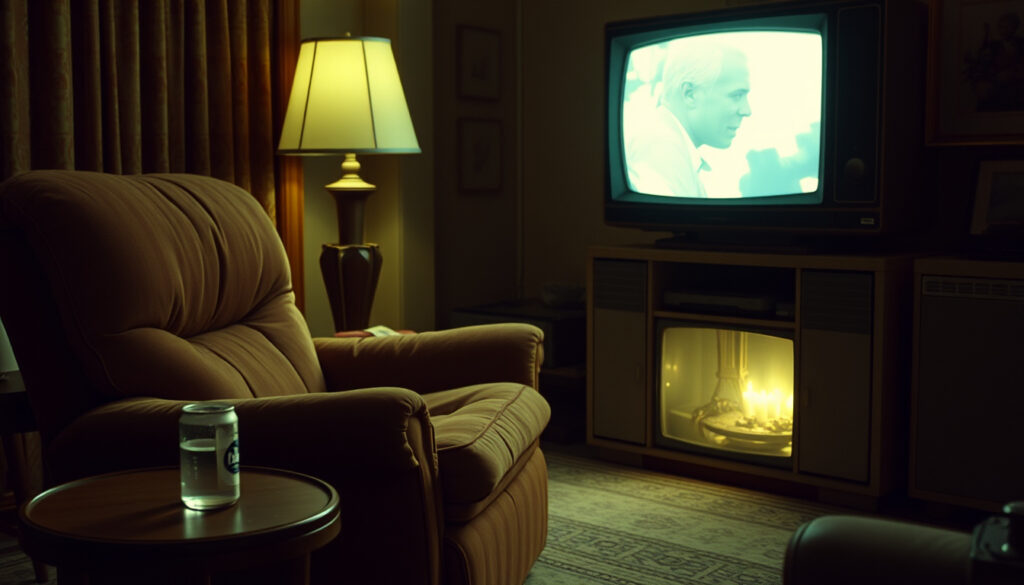
Archie Bunker: The Bigoted Icon of 1970s Television
Archie Bunker was designed to be disliked, but millions of viewers embraced him anyway — a paradox that still fuels debates about satire, prejudice, and television’s power to reflect society back at itself. This article explores how Norman Lear’s creation became a cultural flashpoint and what his legacy means today.
Character debut: 1971 ·
Actor Carroll O’Connor age at death: 76 ·
Spin-off show: Archie Bunker’s Place (1979–1983)
Quick snapshot
- Exact number of episodes of Archie Bunker’s Place (not confirmed in sources)
- Archie Bunker remains a reference point in discussions about media and prejudice (TIME)
Eight key facts about Archie Bunker, one pattern: the character was deliberately crafted to spark discomfort, yet audiences often missed the point.
Here is a summary of the character’s defining attributes.
| Attribute | Detail |
|---|---|
| Full Name | Archibald Bunker |
| Occupation | Dock worker |
| Spouse | Edith Bunker |
| Children | Gloria Stivic (daughter) |
| Residence | 704 Hauser Street, Queens, New York |
| Actor | Carroll O’Connor |
| First appearance | 1971 |
| Last appearance | 1983 |
What was Archie Bunker known for?
His bigoted and controversial views
- Archie Bunker was a fictional character in CBS’s All in the Family (Wikipedia)
- He was known for his racist, sexist, and homophobic opinions (IMDb)
- The series aired from 1971 to 1979 (Wikipedia)
- He worked as a dock worker in Queens, New York (Wikipedia)
All in the Family was described by The Atlantic (the magazine) as the first program to genuinely reckon with the cultural upheaval of 1960s America. The show’s creator Norman Lear told NPR (the public radio network) that his own father was “a bit of an Archie Bunker,” using racist terms that shaped the character. The implication: Lear mined his own family history to make a point about prejudice.
His role as a working-class family man
- Archie Bunker embodies the stereotype of the uneducated, bigoted working-class white man (Wikipedia)
- The show’s domestic setting — 704 Hauser Street — placed his bigotry in a familiar, everyday context (The Atlantic)
For viewers in the 1970s, Archie was a recognizable figure: the patriarch who believed in old-fashioned values and resented change. Yet the show’s writers always made sure his prejudices had consequences, often leading to sharp comedic rebuttals from his wife Edith and son-in-law Michael. The pattern: Archie’s ignorance was never the punchline — it was the setup for a lesson.
His catchphrases and mannerisms
- Archie often told his wife Edith to “Stifle yourself!” (Wikipedia)
- He called his son-in-law Michael “Meathead” (Wikipedia)
- The show’s theme song “Those Were the Days” was sung by Archie and Edith (IMDb)
The catchphrases became cultural shorthand. “Stifle yourself!” entered everyday speech as a way to tell someone to be quiet. But what the character meant as casual dismissal, viewers often repeated affectionately — a sign that many missed Lear’s satirical intent.
Archie Bunker was a walking contradiction: a man who loved his family but insulted everyone else, a source of humor and horror. The Museum of Broadcast Communications (the broadcasting archive) notes that his chair now sits in the Smithsonian — a physical artifact of television’s most uncomfortable hero.
What is the stereotype of Archie Bunker?
The ‘blue-collar bigot’ stereotype
- Archie Bunker embodies the stereotype of the uneducated, bigoted working-class white man (Wikipedia)
- The character was designed to satirize prejudice (NPR)
- Many viewers missed the satire and saw Archie as a hero (EBSCO Research Starters (a research database))
Lear later told NPR that he originally intended Archie to be disliked. But audiences — especially those who shared Archie’s views — embraced him. The catch: satire only works when the target recognizes itself.
How the character reflected real prejudices
- LIFE (the photo-essay magazine) said the show about a reactionary man helped foster greater openness in culture
The show didn’t invent bigotry — it amplified it. Archie’s tirades on race, gender, and politics were pulled straight from headlines and living rooms. TIME (the weekly news magazine) described Archie as a character who changed TV and America forever. What this means: the show forced a national conversation by putting ugly ideas on screen and letting them self-destruct.
Academic study of selective perception
- A well-known study titled “Archie Bunker’s bigotry: A study in selective perception and exposure” analyzed audience reactions (EBSCO)
The study found that viewers who shared Archie’s prejudices tended to see him as a sympathetic figure, while liberal viewers saw him as a buffoon. The research demonstrated that people selectively perceive media to confirm their own biases — a finding that remains painfully relevant in today’s polarized media landscape.
How old was Archie Bunker when he died in real life?
Carroll O’Connor’s age at death
- Archie Bunker did not die — the question refers to the actor Carroll O’Connor
- Carroll O’Connor was born on August 2, 1924, and died on June 21, 2001, at age 76 (IMDb)
The confusion is understandable: the character was so vivid that many fans conflate the actor with the role. O’Connor’s Television Academy (the Emmy organization) biography notes his four Emmy Awards for playing Archie Bunker — proof that the line between performer and character often blurs.
O’Connor’s birth and death dates
- Carroll O’Connor was born in Manhattan and raised in Forest Hills, New York (IMDb)
O’Connor’s career spanned stage, film, and television, but Archie defined him. The Museum of Broadcast Communications identifies him as an actor whose role made him a television star. The trade-off: he was so good at playing a bigot that some viewers never saw the man behind the character.
His cause of death
- He died of a heart attack (IMDb)
O’Connor’s death at 76 marked the end of an era. But his work continued to shape how sitcoms tackle sensitive topics — a legacy that EBSCO notes set a precedent for later comedies.
Many online articles incorrectly state that “Archie Bunker died” — but the character never died on screen. The actor died. This conflation shows how deeply the role overshadowed the performer.
What happened to Archie Bunker?
The character’s arc in All in the Family
- After All in the Family ended in 1979, Archie Bunker appeared in the spin-off Archie Bunker’s Place from 1979 to 1983 (Wikipedia)
- In the spin-off, he ran a bar and continued his bigoted ways (Wikipedia)
Over nine seasons, Archie evolved — but only a little. He occasionally showed moments of growth, especially in his relationship with Edith and Gloria, but the sitcom format required conflict, so his prejudices remained. The pattern: television’s first antihero never got a redemption arc because Lear believed bigotry doesn’t vanish overnight.
Continuation in Archie Bunker’s Place
- Archie Bunker’s Place aired from 1979 to 1983 (Wikipedia)
The spin-off moved the setting from the living room to a bar, but Archie stayed the same: loud, opinionated, and resistant to change. The Museum of Broadcast Communications notes that the character became an American archetype — the bigot who is also a lovable curmudgeon.
End of the series
- The character’s story concluded with the end of that series in 1983 (Wikipedia)
No grand finale, no death scene — just a fade-out. Archie Bunker’s final moments were as ordinary as his first: sitting in his chair, grumbling about the world. Why this matters: the lack of a definitive ending reflects the character’s unresolved nature. He is frozen in time as a television landmark.
What was Archie Bunker’s famous saying?
‘Stifle yourself!’
- Archie often told his wife Edith to “Stifle yourself!” (Wikipedia)
The line became a catchphrase of the 1970s, often used affectionately. But in context, it was a weapon — a way for Archie to silence the one person who challenged him most.
‘Meathead’
- He called his son-in-law Michael “Meathead” (Wikipedia)
Michael Stivic, played by Rob Reiner, was the liberal foil to Archie’s conservatism. “Meathead” was Archie’s dismissive label for anyone he considered foolish, especially his educated son-in-law.
‘Those Were the Days’ (theme song)
- The show’s theme song “Those Were the Days” was sung by Archie and Edith (IMDb)
The song set the nostalgic tone: Archie longing for a simpler, whiter, more orderly America — a time that existed mostly in his imagination. TIME notes that All in the Family generated merchandising including records, T-shirts, beer mugs, and books — proof that the song and the show became a cultural franchise.
Timeline
- 1971: All in the Family premieres; Archie Bunker introduced (Wikipedia)
- 1972–1979: All in the Family runs for 9 seasons, winning numerous Emmy Awards (Wikipedia)
- 1979: All in the Family ends; spin-off Archie Bunker’s Place begins (Wikipedia)
- 1983: Archie Bunker’s Place concludes, ending the character’s run (Wikipedia)
- June 21, 2001: Carroll O’Connor dies of a heart attack at age 76 (IMDb)
Clarity check
Confirmed facts
- Archie Bunker’s catchphrase “Stifle yourself!”
- Carroll O’Connor born August 2, 1924, died June 21, 2001
- All in the Family aired from 1971 to 1979
- O’Connor won four Emmy Awards for playing Archie (Wikipedia)
- The show’s theme song “Those Were the Days”
What’s unclear
- Exact number of episodes of Archie Bunker’s Place (source discrepancy)
- Whether audiences today would react the same way as 1970s viewers
Quotes from the Bunker universe
Stifle yourself!
— Archie Bunker, to Edith
Meathead.
— Archie Bunker, to Michael Stivic
Those were the days.
— Archie and Edith Bunker, singing the theme song
The character who was supposed to be a warning became a mirror. For fans of classic television, the takeaway is clear: Archie Bunker remains a touchstone not because he was right, but because he forces us to ask who we are laughing at — and why.
Frequently asked questions
Was Carroll O’Connor a nice guy in real life?
Yes, by most accounts O’Connor was well-liked and active in philanthropic causes. His Television Academy biography highlights his work as an actor, producer, and director, separate from his iconic role.
Is Archie Bunker Irish?
The character’s surname Bunker is of English origin, but many fans assume he is Irish-Catholic because of his Queens, New York setting and cultural markers. The show never explicitly stated his ethnicity.
Who played Archie Bunker?
Carroll O’Connor. He portrayed Archie from 1971 through the end of Archie Bunker’s Place in 1983 (Museum of Broadcast Communications).
What awards did All in the Family win?
The show won multiple Emmy Awards, including Outstanding Comedy Series. Archie Bunker’s character alone earned Carroll O’Connor four Emmys (Wikipedia).
How many seasons did All in the Family have?
The series ran for nine seasons from 1971 to 1979 (Wikipedia).
Related reading: That ’70s Show Cast: Where Are They Now · Carl Shameless: Gallagher Character & Ethan Cutkosky
More related posts
 Daffy Duck: Character Guide, Famous Quotes, and History
 Great Khali: Health, Net Worth, and Life After WWE
 English Royal Family Guide: Current Monarchy & Titles
 Jessica Lowndes: Biography, Movies, Music & More
 The Children’s Place Reviews: Quality, Shipping & Service
 How Long to Air Fry Chicken Breast: Times by Temp & Size
 Danielle Collins: Rheumatoid Arthritis, Health & Retirement
 Henry Fonda: Relationships, Family, and Legacy
